

PROBATE LAW
Chattanooga Probate Attorney
Whether the estate is straightforward or more complex, we're here to help you move forward with clarity and confidence.
You Just Lost Someone You Love. Now You're Expected to Know What to Do Next?
The funeral is over.
The flowers are beginning to fade.
And suddenly, everyone is looking to you.
✓ What happens to the house?
✓ Can I access the bank account?
✓ Dad had a will. Doesn't that mean we can skip probate?
✓ Where do I even begin?
If you've found yourself asking these questions, you're not alone. Most families have never been through probate before, and trying to navigate legal requirements while grieving can feel overwhelming.


You don't have to figure it out alone
As your local Chattanooga probate attorney, we walk families through probate every day. We'll explain what needs to happen, answer your questions in plain English, and guide you through each step so you can focus less on paperwork and more on your family.
Whether the estate is straightforward or more complex, we're here to help you move forward with clarity and confidence.

Click Play to View Video
Ways we can help
PROBATE SERVICESHelp You Understand What Comes Next
We'll explain the probate process and answer your questions every step of the way.
Start the Probate Process
We'll prepare and file the paperwork needed to open the estate.
Handle Debts and Creditor Claims
We'll guide you through paying valid debts and addressing any claims against the estate.
Prepare and File Court Documents
We'll handle the legal paperwork required throughout the probate process.
Notify Family Members and Beneficiaries
We'll make sure the required legal notices are provided to the appropriate people.
Distribute the Estate
Once the legal requirements have been met, we'll help ensure assets are distributed according to the will or Tennessee law.
Represent You in Court
When court appearances are required, we'll be there to represent and guide you.
Resolve Family Disagreements
If questions or disputes arise, we'll point you in the right direction and work toward practical solutions.
Identify and Gather Assets
We'll help locate, value, and organize the estate's assets.
Guide the Executor
If you've been named executor, we'll walk you through your responsibilities.
Learn moreFrequently Asked Questions
-
Probate is the legal process through which a deceased person's assets are distributed and debts settled. The court validates the will, if one exists, and appoints an executor to manage the estate. The process involves inventorying assets, paying debts and taxes, and distributing the remaining assets to heirs.
-
The duration of the probate process can vary widely, ranging from a few months to several years. Factors affecting the timeline include the complexity of the estate, whether there are disputes among heirs, and the efficiency of the court. In straightforward cases, probate might take 6 to 12 months, while more complicated estates could take longer.
-
Generally, assets held solely in the deceased person's name, such as real estate, bank accounts, and personal property, are subject to probate. However, assets that are jointly owned or have designated beneficiaries, like life insurance policies and retirement accounts, typically bypass probate. Understanding what qualifies can help in estate planning.
-
Yes, probate can often be avoided through proper estate planning strategies, such as creating a living trust, designating beneficiaries for accounts, and holding property jointly. These methods allow assets to transfer outside of probate, potentially saving time and costs for heirs. Consulting with our estate planning attorney can help identify the best strategies for your situation.
-
Probate alternatives are methods to transfer assets outside of the probate process, helping to avoid the associated costs and delays. Common alternatives include living trusts, which allow for the management of assets during the grantor's life and distribution after death without going through probate; joint ownership, where assets are owned by multiple people, automatically transferring upon death; and beneficiary designations, commonly used for retirement accounts and life insurance policies, allowing for direct transfers to named beneficiaries. Other alternatives include gifting assets during one's lifetime and payable-on-death accounts.
-
An executor is responsible for managing the estate throughout the probate process. Their duties include gathering assets, paying debts and taxes, distributing remaining assets to beneficiaries, and filing required documents with the court. Executors must act in the best interests of the estate and beneficiaries, maintaining transparency throughout the process.
-
To contest a will, you must have standing, meaning you have a direct interest in the estate. Grounds for contesting include lack of testamentary capacity, undue influence, or improper execution. The process typically involves filing a petition with the probate court, and you may need to present evidence to support your claim.
What Our Clients ARE SAYING-
"This law firm is quick at getting things done. They stay on top of things. It's not one of those firms that take forever to answer a question. Mr. Kennedy is great & easy to work, unlike any other lawyers I have had to deal with. I would highly recommend this law firm to anyone."
—Tonya
-
"Darren has been wonderful to work with as has been his office staff. They are very communicative and prompt in answering."
—LR
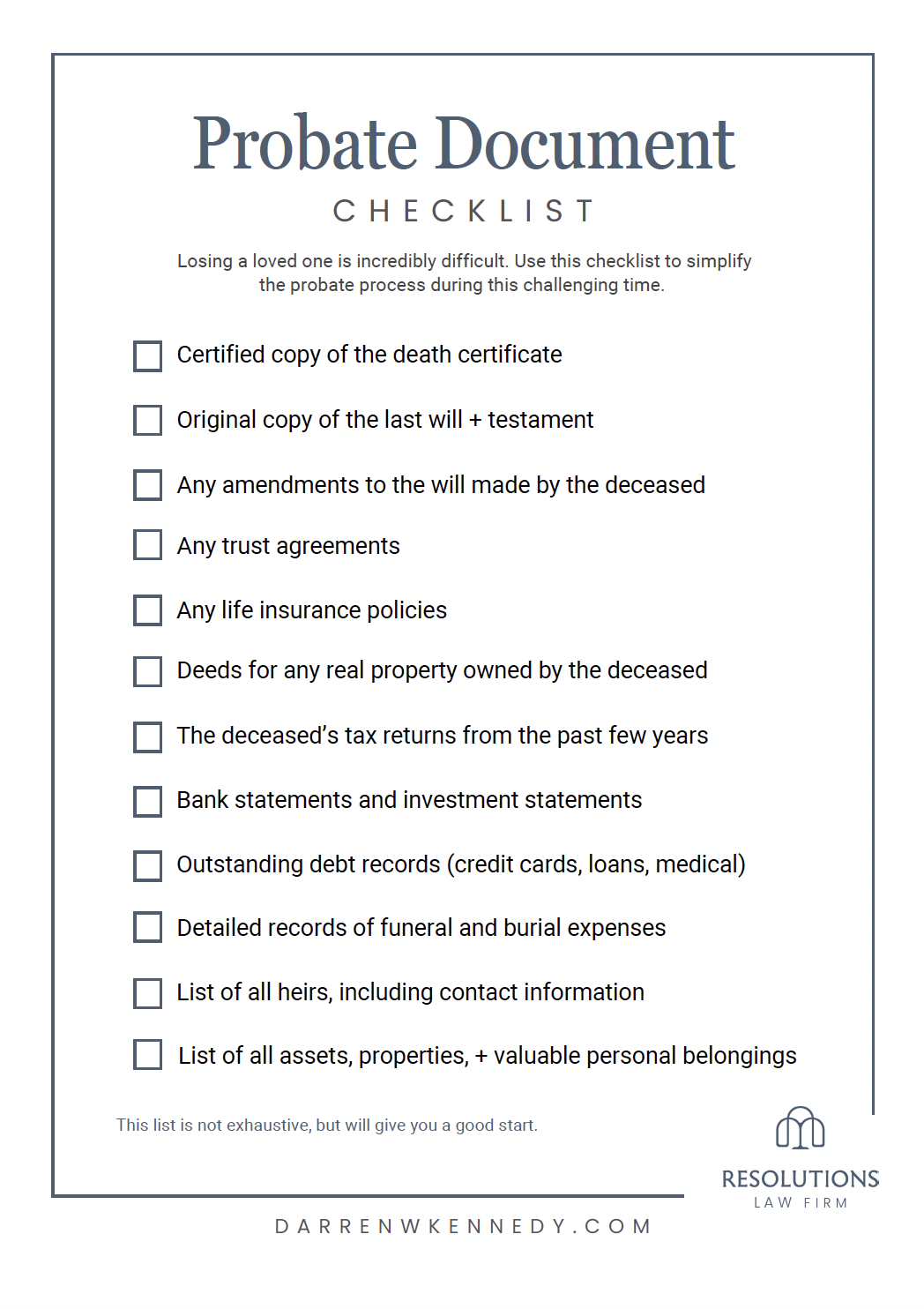
Feeling overwhelmed in the probate process?
Download our FREE probate document checklist to guide you in gathering the right paperwork so you can proceed with assurance.

NEXT STEPSWhen you're ready, we're here.
Let us guide you through probate so you can spend less time worrying about legal details and more time focusing on what matters most.
Probate consultations may require a fee.